
Diplomatic Compass · Policy Brief · September 2026 · By Hafsa M. Temsamani, PhD
Executive Assessment
NATO’s counter-terrorism challenge is increasingly one of prevention: strengthening the ability of Allies to anticipate, prevent and manage threats before they generate wider security consequences. Terrorism remains a persistent asymmetric threat to the Alliance, yet most counter-terrorism instruments remain primarily under national authority. NATO’s contemporary framework is organised around awareness, capabilities and preparedness, and engagement and cooperation, with the Alliance reinforcing national efforts rather than replacing them.
Belgium’s new Penal Code, in force since 1 September 2026, provides a timely national case. Article 376 criminalises the public glorification of terrorism where defined risk and intent thresholds are met, reinforcing the preventive dimension of Belgium’s counter-terrorism framework. Its NATO relevance lies in the relationship between national prevention, national resilience and Allied preparedness. The broader policy question is how NATO can reinforce resilience against terrorism, leverage partnerships and preserve complementarity between the Alliance, national authorities and other international organisations.
1. NATO’s Counter-Terrorism Posture
Terrorism has featured on NATO’s security agenda for decades and retains the potential to acquire collective-defence significance. What has evolved is the weight placed on prevention and preparedness alongside response, strengthening the conditions that reduce the risk of threats escalating in the first place.
The one occasion on which terrorism triggered NATO’s collective-defence clause remains instructive. Following the attacks of 11 September 2001, the North Atlantic Council agreed on 12 September that Article 5 could apply and confirmed on 2 October that it did, the only such invocation in Alliance history. Its continuing significance lies in what it established: terrorism can reach the threshold of collective defence, underscoring the importance of prevention, preparedness and collective response.
NATO’s 2024 Policy Guidelines on Counter-Terrorism place counter-terrorism across the Alliance’s three core tasks and concentrate effort on awareness, capabilities and preparedness, and engagement and cooperation. National authorities retain primary responsibility for domestic security and resilience; NATO’s role is to reinforce national and international efforts rather than replace them.
The 2026 Ankara Summit Declaration reaffirmed NATO’s 360-degree approach to deterrence and defence. The policy challenge is consequently not only how the Alliance would respond to a major terrorist attack, but how NATO and its members can strengthen the conditions that reduce the likelihood of a threat reaching collective-defence significance.
2. National Resilience and the Preventive Layer
Counter-terrorism depends heavily on national capabilities, including criminal law, intelligence, policing, prosecution, border security and measures addressing terrorist radicalisation and mobilisation. NATO complements these efforts through shared threat awareness, preparedness, capability development, interoperability and strategic consultation, making national resilience a critical component of Allied security, as vulnerabilities within individual Allies can affect the preparedness and continuity of the Alliance as a whole.
The connection to counter-terrorism is therefore not that national criminal legislation implements NATO policy. Rather, effective national institutions reduce vulnerabilities on which wider Allied security depends. National authorities provide legal, intelligence and law-enforcement instruments, while NATO contributes awareness, preparedness, military capabilities and consultation within a broader counter-terrorism architecture.
Partnerships extend this architecture beyond Allied territory. Terrorist networks operate across borders and regions, making sustained cooperation with the European Union, other international organisations and NATO partners, particularly in the Southern Neighbourhood, important to effective prevention and preparedness. Information-sharing, capacity-building and practical cooperation can strengthen situational awareness, national capabilities and resilience while reinforcing complementarity across the wider counter-terrorism effort.
3. Belgium’s New Article 376: A National Case
Belgium’s new Penal Code entered into force on 1 September 2026, replacing the 1867 Penal Code after more than a century and a half. Among its counter-terrorism provisions, Article 376 addresses incitement to terrorist offences and the public glorification of terrorism.
The provision is defined by two important limiting requirements. The conduct must create a serious and real risk that one or more terrorist offences may be committed, and the individual must act with the intention of creating that risk. Article 376 therefore seeks to address conduct situated upstream of terrorist violence while distinguishing it from expression that does not meet those statutory conditions.
The Belgian measure also sits within a wider European legal framework. Article 5 of Directive (EU) 2017/541 requires Member States to criminalise public provocation to commit terrorist offences and addresses forms of indirect advocacy where they create a danger that terrorist acts may be committed. Belgium therefore provides a relevant national case within a broader European counter-terrorism environment.
The harder issue concerns the precision and implementation of preventive measures. Belgium’s earlier experience is instructive: in 2018, the Constitutional Court annulled the removal of the requirement that terrorist incitement create a serious risk that an offence might be committed. Article 376 now incorporates risk-and-intent thresholds intended to provide clearer limits. Its effectiveness will therefore depend on consistent prosecutorial and judicial application, ensuring that preventive action remains both operationally relevant and legally robust.
For NATO policy analysis, the important question is not whether the Belgian provision should be replicated elsewhere. It is what the case reveals about a broader challenge shared across the Alliance: how can national authorities intervene further upstream in the pathway towards terrorist violence while maintaining sufficiently clear thresholds for preventive action?
4. From National Prevention to Allied Preparedness
The first NATO-relevant dimension is prevention before operationalisation. Terrorist violence may be preceded by ideological legitimisation, recruitment, mobilisation, financing, networking and operational preparation. National authorities possess many of the legal and intelligence tools needed to act within this space, while NATO contributes wider awareness, preparedness and capability development. These levels remain institutionally distinct but are strategically connected.
The second dimension is resilience. Article 376 illustrates how a national counter-terrorism framework can adapt to an evolving threat environment. Strong legal, intelligence, law-enforcement and preparedness institutions can reduce vulnerabilities that might otherwise generate wider security consequences. The strategic connection therefore lies in the contribution of effective national systems to Allied preparedness, not in the legislation itself becoming an Alliance instrument.
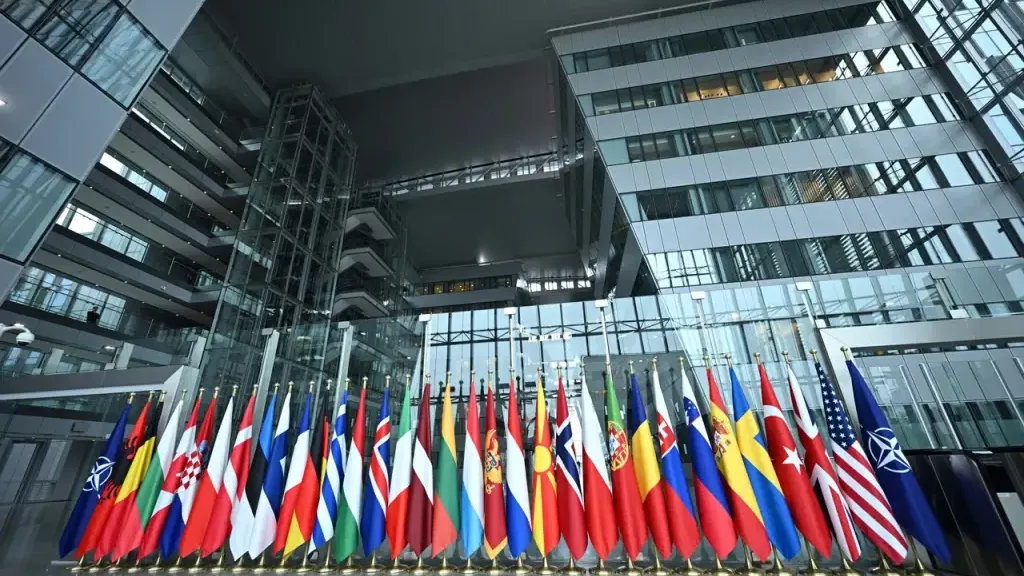
Belgium also has a particular host-nation dimension. NATO Headquarters is located in Brussels and SHAPE near Mons. The resilience of Belgium’s security environment therefore supports institutions central to Allied political consultation and military command. This does not alter the respective responsibilities of Belgium and NATO, but it demonstrates directly how national resilience can have consequences beyond national borders.
A third dimension concerns the credibility of preventive action. Measures that are insufficiently effective may fail to interrupt genuine pathways towards terrorist violence, while measures applied too broadly can undermine institutional confidence. The strategic relevance of Article 376 will therefore depend not simply on the existence of the offence, but on the consistent and legally precise application of its risk and intent thresholds. Preventive instruments strengthen resilience when they remain sufficiently clear, predictable and legitimate.
The broader NATO picture is consequently a layered counter-terrorism architecture: national authorities exercise their legal and domestic-security responsibilities; NATO strengthens shared awareness, preparedness and capabilities; and partners and international organisations contribute complementary instruments. This division of effort reflects the transnational character of terrorism while preserving institutional responsibilities.
5. Policy Implications
For NATO
NATO should continue to strengthen the national-resilience dimension of counter-terrorism through its existing framework while maintaining complementarity with national authorities and other international actors. Greater exchange of national experience can help identify vulnerabilities before they acquire operational consequences. The Alliance should also continue integrating evolving risks, including terrorist exploitation of emerging technologies and information environments, into shared awareness and preparedness.
Partnerships should remain central to this effort. Terrorist networks operate across borders, making sustained cooperation with the European Union, other international organisations and NATO partners, particularly in the Southern Neighbourhood, essential to effective prevention and preparedness. Information-sharing, capacity-building and practical cooperation across these partnerships can strengthen situational awareness, national capabilities and resilience while reinforcing complementarity across the wider counter-terrorism effort.
For Allies
Allies should regard effective national counter-terrorism capacity as part of the wider foundation supporting Allied resilience. Prevention depends not on legislation alone but on coherent interaction between intelligence, law enforcement, judicial authorities, preparedness structures and international cooperation.
Belgium provides a relevant national case within a diverse Allied legal landscape. Different Allies operate within different constitutional and legal systems; the wider policy lesson concerns the relationship between upstream prevention, clearly defined legal thresholds and resilient national institutions capable of identifying and managing terrorist threats before they escalate.
For Belgium
The significance of Article 376 will ultimately be determined through implementation. Consistent application of its serious-and-real-risk and intent requirements will be important to keeping the provision focused on terrorism-related conduct and ensuring that it contributes effectively to Belgium’s wider preventive framework.
Belgium’s experience can also contribute to Allied exchanges on counter-terrorism and resilience, particularly given its position as host to key NATO institutions, while recognising the diversity of national legal approaches across the Alliance.
Conclusion
NATO’s counter-terrorism challenge is increasingly concerned with what happens before a terrorist threat reaches the level of collective defence. The Alliance must retain the capacity to respond when necessary, but its effectiveness also depends on resilient Allies capable of identifying, preventing and managing threats within their national systems.
Belgium’s new Article 376 provides a timely national case through which to examine that preventive dimension. Its relevance lies in illustrating how national preventive capacity can contribute to the wider security environment on which Allied preparedness depends.
For NATO, the policy requirement is therefore one of strategic complementarity: national prevention strengthens national resilience; national resilience supports Allied security and preparedness; and partnerships extend awareness and cooperation beyond Alliance borders. The Article 5 precedent remains a defining legacy of 9/11 for the Alliance, while the enduring challenge is to strengthen the national, Allied and partnership-based capacities required to reduce the risk of terrorism reaching that threshold again.
How to cite: Temsamani, H. M. (2026). NATO Counter-Terrorism and Belgium’s New Article 376: From National Resilience to Allied Security. Diplomatic Compass Policy Brief, September 2026. Brussels: Diplomatic Compass.

