
Diplomatic Compass · Edition No. 11 · 6 October 2026 · By Hafsa M. Temsamani, PhD
Editorial
From Commitments to Command: Nuclear Deterrence under Pressure
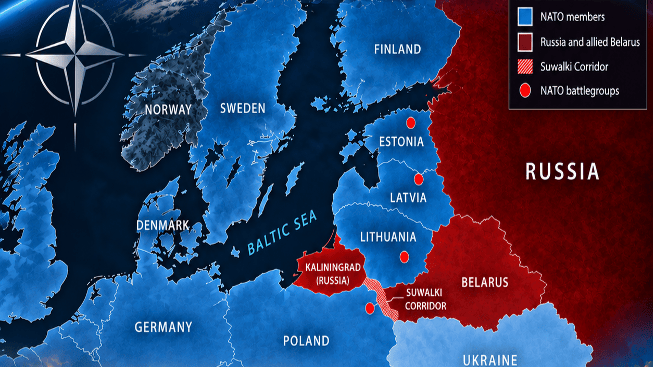
Russia’s 30 September warning over Kaliningrad matters less as another episode of nuclear rhetoric than as a test of NATO’s evolving deterrence architecture. By linking the security of the exclave to possible nuclear escalation, Moscow is probing whether nuclear coercion can shape Allied calculations on reinforcement, exercises and freedom of action. The pressure point is structural: European Allies and Canada are assuming greater conventional responsibility, while NATO’s ultimate nuclear guarantee remains predominantly US-backed, complemented by the British and French deterrents. The question is therefore not simply whether NATO can deter, but whether it can strengthen European and Canadian operational responsibility without creating new vulnerabilities in escalation management or Alliance cohesion.
Edition 11 examines that challenge across NATO’s command structure, transatlantic reinforcement, NATO–EU hybrid response, nuclear deterrence coordination and the Southern Flank. The common test is one of conversion: whether higher expenditure and responsibility-sharing can generate integrated military effect, sustainable readiness and credible deterrence under nuclear, conventional and hybrid pressure. From commitments to command is therefore not a question of implementation alone; it is increasingly a measure of NATO’s ability to preserve decision space and deterrence credibility under coercion.
I. NATO Affairs
Kaliningrad Tests NATO’s Nuclear Deterrence Posture
Russia’s 30 September 2026 warning over Kaliningrad brought explicit nuclear signalling back into the Baltic deterrence equation. Moscow linked any attempt to isolate the exclave to possible nuclear escalation, while NATO reaffirmed its defensive posture and rejected nuclear coercion. The significance lies less in the probability of nuclear use than in the attempt to shape Allied calculations around reinforcement, exercises and contingency planning. Kaliningrad’s combination of military concentration and geographic exposure makes it both an operational asset and a pressure point in the NATO–Russia deterrence relationship.
The episode also exposes a structural asymmetry beneath Europe’s growing conventional responsibility. NATO’s nuclear deterrence remains predominantly anchored in the United States, complemented by the independent British and French deterrents. The 5% of GDP by 2035 investment commitment can strengthen readiness, resilience and conventional capability, but it does not create a separate European nuclear architecture. Greater European responsibility therefore does not automatically translate into nuclear autonomy: NATO must manage a more Europeanised conventional posture while its ultimate nuclear guarantee remains fundamentally transatlantic.
Key Takeaways
- Nuclear Signalling Targets Allied Decision Space: The objective is to influence NATO risk calculations as much as to signal possible escalation.
- Kaliningrad Links Conventional Vulnerability to Nuclear Coercion: Its geography gives Moscow a platform for both military posture and escalation signalling.
- Escalation Control Remains Integral to Deterrence: NATO must preserve freedom of action without allowing nuclear rhetoric to generate self-deterrence.
- Europe’s Conventional Rebalancing Does Not Equal Nuclear Autonomy: Greater European capability does not alter the predominantly US-backed structure of NATO’s nuclear guarantee.
- The 5% Commitment Does Not Create a European Nuclear Pillar: A separate European nuclear architecture would require political, doctrinal and command arrangements extending well beyond defence expenditure.
II. Transatlantic Security
NATO 3.0 and the Redistribution of Operational Authority: The UK at JFC Norfolk
NATO’s transatlantic command architecture is entering a more differentiated phase of responsibility-sharing, with European Allies assuming greater operational authority while the United States retains the Alliance’s core strategic functions and high-end enablers. The 24 September 2026 transfer of JFC Norfolk to United Kingdom leadership, with General Nick Perry becoming the first British officer to command the headquarters, is one manifestation of this wider adjustment within the NATO Command Structure. It forms part of the redistribution under which European Allies are assuming leadership of NATO’s operational-level Joint Force Commands while the United States retains SACEUR and key theatre-level command responsibilities.
The policy significance lies in the renewed centrality of the Atlantic reinforcement axis. Maritime access, strategic lines of communication, force flow, theatre enablement and High North access are increasingly converging within the same deterrence equation. JFC Norfolk therefore illustrates a broader post-Ankara shift: Europeanisation of the operational layer is advancing without strategic decoupling from the United States. The emerging model redistributes operational ownership while preserving the transatlantic dependencies underpinning reinforcement, escalation management and collective defence. For the United Kingdom, assuming JFC Norfolk further consolidates its position at the intersection of North American reinforcement, European theatre requirements and NATO’s northern maritime approaches.
Key Takeaways
- Responsibility-Sharing Is Entering the Command Architecture: Greater European responsibility is increasingly reflected in operational authority, not only expenditure and capability commitments.
- The United Kingdom Is Reinforcing Its Role as a Transatlantic Command Hinge: Leadership of JFC Norfolk places London at a critical operational junction between North American reinforcement and European theatre requirements.
- The Atlantic Reinforcement Axis Is Regaining Strategic Weight: Force flow, maritime access, strategic lines of communication and theatre enablement are again central determinants of deterrence credibility.
- Europeanisation Is Occurring Below the Strategic Level: European Allies are assuming greater operational command while the United States retains SACEUR and other critical strategic and theatre-level functions.
- The NCS Is Becoming an Instrument of Transatlantic Rebalancing: Post-Ankara Summit responsibility-sharing is increasingly being institutionalised through command assignments, reinforcement responsibilities and operational ownership.
III. NATO–EU Cooperation
Hybrid Pressure Tests the NATO–EU Interface: Attribution and Response
The hybrid domain is becoming a test of NATO–EU response coherence rather than institutional complementarity alone. State-directed sabotage, cyber activity and other below-threshold operations increasingly exploit the seams between military command, national intelligence, law-enforcement and civilian authorities. The resulting challenge is not simply detection, but whether fragmented institutional inputs can produce a sufficiently coherent operating picture to support attribution, calibrated response and escalation control.
SACEUR General Alexus Grynkewich’s 28 September engagement with the European Parliament’s Security and Defence Committee brought this problem directly into the NATO–EU interface. His emphasis on enhanced information-sharing, public attribution and consultation before national responses points towards a denser detection–attribution–response architecture linking SHAPE with national military and non-military security structures. Attribution nevertheless remains a sovereign national prerogative, creating an inherent tension between national decision authority and the requirement for Alliance-wide signalling coherence. Russia’s use of below-threshold activity is therefore testing more than national resilience: it is testing whether NATO, the EU and Allies can convert distributed situational awareness into coordinated effect without creating exploitable gaps or unintended escalation.
Key Takeaways
- Hybrid Pressure Is Exploiting Institutional Seams: The vulnerability lies increasingly in the interfaces between military, intelligence, law-enforcement and civilian-security structures.
- Situational Awareness Is Becoming an Operational Requirement: A common operating picture increasingly conditions attribution, response tempo and decision coherence.
- Attribution Is Part of the Deterrence Toolkit: Its utility depends not only on evidentiary confidence, but on the consistency of subsequent Allied signalling and response.
- National Sovereignty Creates a Coordination Constraint: Attribution and response remain nationally controlled even where the operational pattern is transnational and Alliance-wide.
- NATO–EU Cooperation Is Moving into the Response Cycle: Hybrid pressure is pushing the relationship beyond consultation towards practical interaction across detection, attribution, resilience and response.
IV. Belgium’s Defence Ecosystem
Belgium at the Nuclear Interface: NATO Deterrence and French Forward Deterrence
The creation of the Franco-Belgian Nuclear Steering Group introduces a new bilateral layer into Belgium’s deterrence policy. Its significance lies in the interaction between NATO’s collective nuclear posture and France’s evolving concept of Forward Deterrence, developed through bilateral dialogues with selected European partners. France retains sovereign nuclear decision-making outside NATO’s Nuclear Planning Group, while seeking deeper consultation on deterrence, escalation and the conventional–nuclear interface.
The timing is particularly significant. As European Allies and Canada assume greater responsibility for conventional defence under NATO 3.0, the United States continues to provide the nuclear umbrella that Rutte has described as the ultimate guarantor of Allied freedom. For Belgium, the policy question is therefore not substitution, but how a deeper bilateral dialogue with France can reinforce European deterrence while remaining coherent with NATO’s transatlantic nuclear architecture. The new Steering Group places Belgium directly inside this emerging interface between greater European conventional responsibility, French nuclear signalling and continued US extended deterrence.
Key Takeaways
- Belgium Is Deepening Its Nuclear Policy Role: The new Franco-Belgian Nuclear Steering Group creates a direct bilateral channel on deterrence, escalation and nuclear policy.
- NATO 3.0 Is Rebalancing Conventional Responsibility, Not the Nuclear Guarantee: European Allies and Canada are taking on more conventional defence responsibilities while the US nuclear umbrella remains central to NATO deterrence.
- France Adds a Distinct European Nuclear Dimension: French Forward Deterrence brings an additional European layer to deterrence discussions while France retains sovereign nuclear decision-making.
- Conventional and Nuclear Deterrence Are Becoming More Closely Linked: Europe’s military build-up increasingly intersects with escalation management, signalling and nuclear planning.
- Coherence with NATO Will Be the Test: The value of the Franco-Belgian dialogue will depend on whether it strengthens European deterrence without fragmenting NATO’s wider transatlantic posture.
V. Southern Neighbourhood
The Mediterranean under Multi-Domain Pressure: NATO’s Southern Maritime Readiness
NATO’s Southern Flank is undergoing an operational shift rather than a strategic rediscovery. The Mediterranean is already embedded in the Alliance’s southern architecture through JFC Naples, the NATO Strategic Direction–South Hub and standing maritime forces; the emerging variable is the increasing contestation of the maritime domain itself. Dynamic Guard 2026, conducted in September under Standing NATO Maritime Group Two (SNMG2), tested Allied ships against uncrewed aircraft systems, missiles and air threats while communications and sensors operated under electronic-warfare pressure. The exercise points to a tighter convergence between maritime C2, air defence, counter-UAS, ISR and electromagnetic-spectrum resilience within fleet readiness.
This adaptation also carries a wider deterrence dimension. Russia maintains a multi-domain military presence in the Mediterranean, extending the Alliance’s Russia calculus beyond the eastern land flank and into the southern maritime theatre. The resulting requirement is not simply persistent NATO presence, but the capacity of standing forces to retain situational awareness, freedom of manoeuvre and combat effectiveness under increasingly compressed warning and decision cycles. The Mediterranean therefore sits simultaneously within NATO’s 360-degree posture and its wider deterrence-and-defence architecture, requiring southern readiness to account for both region-specific instability and cross-theatre military pressure.
Key Takeaways
- The Southern Flank Is an Operational Readiness Space: NATO’s established southern architecture is increasingly being tested against higher-end maritime and multi-domain requirements.
- Russia Raises the Military Stakes in the Mediterranean: Moscow’s multi-domain presence links southern maritime readiness directly to NATO’s wider deterrence-and-defence calculus.
- Fleet Defence Is Becoming Multi-Domain by Default: EW, ISR, counter-UAS, air defence and C2 resilience increasingly converge at force-employment level.
- Electromagnetic Resilience Conditions Maritime Effect: The ability to sense, communicate and command under spectrum contestation is becoming integral to freedom of manoeuvre and force protection.
- Standing Presence Must Generate Operational Effect: SNMG2’s value increasingly rests not simply on presence, but on its capacity to remain integrated, survivable and combat-credible under contested conditions.
VI. Spotlight Event | Euronews Defence & Space Summit
At the 30 September 2026 Euronews Defence & Space Summit in Brussels, NATO Secretary General Mark Rutte, Bulgarian Prime Minister Rumen Radev and EU Defence Commissioner Andrius Kubilius reflected different approaches to mounting Russian nuclear and hybrid pressure.
Key Takeaways
- Deterrence and dialogue remain politically contested responses to Russian pressure.
- Hybrid activity and nuclear signalling are increasingly interacting within the same escalation-management space.
- European coherence will depend on aligning political messaging with credible deterrent effect.
VII. Book Review
The Evolution of Nuclear Strategy. Lawrence Freedman & Jeffrey H. Michaels
The Evolution of Nuclear Strategy examines how deterrence, escalation and stability have evolved alongside changes in the nuclear balance. Its relevance is particularly clear in the context of Kaliningrad, where Russian nuclear signalling again raises questions of coercion, escalation control and Allied decision-making. For NATO, the central challenge is to preserve credible deterrence without allowing nuclear threats to constrain conventional freedom of action or generate self-deterrence.
Closing Note
This concludes Edition No. 11 of the Diplomatic Compass Newsletter. Thank you for reading and for your continued engagement.
📩 Share this edition with someone who should be reading it.
Subscribe to the Diplomatic Compass Review
Independent perspectives on NATO, defence and security, delivered to your inbox.

